


How long should my webinar be? How long should I run it for? I get asked this all the time, and it is a completely fair question, especially if you are running webinars because you want to get clients from them.
So let me give you the answer, and then let me show you how to work it out for yourself.
Here is the rule. The longer people stay on your webinar, the more likely they are to buy.
And when you think about it, it makes complete sense, right? The more time people spend with you, the more relationship you build, and the easier the sale becomes at the end of it.
I have taken over 600 businesses through the Webinar Conversion Accelerator, and the pattern is the same every time.
Most people think about this the wrong way
Before we get into the actual numbers, I want you to understand the mindset, because this is where most people go wrong.
A lot of people believe that the less time somebody stays on a webinar, the better it is.
They say to me, Simone, my people are busy, they do not have time, so I do not want to run something long.
I get it. I really do.
But let me break that completely.
It is very hard to sell something in 10 minutes, or 15, or 20, or 30, or even in an hour, because there simply is not enough relationship built yet.
So your job is not to protect people from your webinar.
Your job is to keep them in the room for as long as you can, and to make it so good that they actually want to stay there.
People do not stay if the webinar is bad
Here is the caveat though.
People do not stay on a long webinar if the webinar is not good.
Think about it like a YouTube video.
If you do not like the video, you are not going to keep watching it, are you?
You click off and you go somewhere else. A webinar is exactly the same.
So the more value you give, the more entertaining you are, the more aha moments people get, the more they can interact and ask you questions and start to see a real possibility for themselves, the longer they are going to stay.
And the longer they stay, the more they buy.
So before you worry about the length, worry about whether the thing is any good.
The 30 to 45 minute webinar
There is absolutely a case for a short webinar, and it comes down to three situations.
The first one is if you are working with corporations, or with leaders who are incredibly busy and only have a small window of time to give you.
In that case, 30 to 45 minutes works really well.
The second one is if you do not have much time yourself and you want to build a stronger relationship without selling anything at the end. That is a perfectly good reason to keep it short.
And the third one is if you are already great at presenting and you are a household name in your world. If people have been following you for a while and they already know you, then yes, you can convert in 30 to 45 minutes, because they do not need as much time to make up their mind about you.
But if they do not know you at all?
Then those first 30 to 45 minutes are really just there to show people the value you can give them and to start building the relationship.
Do not expect a cold audience to buy something big in that window.
The 60 minute webinar
Then you have the standard one, which is 60 minutes.
60 minutes is not my favourite, and it is not the one that converts the most. But it is the one that gets the most people in the room.
Why? Because we think in hours.
We have been trained and conditioned to think in 60 minute slots. So when you say to somebody, hey, it is going to be an hour, they know exactly what that means and they can block it out in the calendar without really thinking about it.
And it works with any audience you like.
Leaders, organisations, corporates, entrepreneurs, general public, all of them.
Can you make a sale in 60 minutes?
Yes, you can. But it works best when what you are selling is an easy yes. Something affordable, something that does not take a lot of thinking about, a really good deal, or simply an invitation to book a call.
If the call to action is simple, 60 minutes is great.
The 2 to 3 hour webinar
If you want to sell something at a higher level, this is the one I would go for.
And I know that for some of you, reading 2 to 3 hours makes you think, oh my God Simone, do I even have enough content for that?
If that is what you are thinking, it probably means you are not ready for it yet, and that is completely fine. Start with the 60 minute one instead.
But if you have been delivering presentations for a while, you already have all the material you need. You do not need new content.
You take the exact same presentation you were running in 60 minutes and you expand it, with exercises, with Q and A, with more interaction.
You expand the time or you contract the time using the same material.
And here is why 2 to 3 hours works so well.
In that time you build such a strong relationship that people can see you really know your stuff, and if it is good, the sale becomes the easiest sale you will ever make.
Because after spending three hours with you, they are not guessing whether they like working with you. They already know.
So the only question left in their head is, do I want more of this?
And remember, most of the time you have given them all of that for free.
So they are sitting there thinking, this person was willing to spend three hours helping me solve my problem.
That does something to a person.
So if you are selling a high ticket directly on the webinar with no sales call, go for 2 to 3 hours.
If you are inviting people to book a call instead, then 60 to 90 minutes will do the job nicely.
The half day and the full day
And then there is the last one, which is the half day or the full day.
Now we are moving more into online event territory. Half day events, full day events. I ran this model for years, and I have even run three day ones.
These are the best in terms of conversion, and again, it is the same reason as always. The more time I spend with you, the more likely I am to buy.
You can literally take somebody from I have no idea who you are, all the way to a high ticket sale, inside a single day.
And the other nice thing is that you can charge people to attend a half day or a full day, which changes the quality of the room completely.
The trade off you need to know about
The longer your webinar is, the fewer people will register for it.
That is just how it goes. A full day is a much bigger ask than an hour, so people have to find more space in their calendar, and some of them simply will not.
So registrations go down, but the conversion rate goes up.
Although, and this is the interesting bit, sometimes people see that it is a 2 to 3 hour session and they think, wow, that must be really valuable, and they register more. So it can go the other way too.
Which is exactly why I am inviting you to play with this.
There is no magic length that converts better than every other one. It depends on your skill, on the audience you are targeting, on how long they have known you, and on the price point you are selling at.
So the real question is this. What is the goal of your webinar?
If the goal is just to get the lead and build a relationship, 60 minutes is fine.
If the goal is to make high ticket sales, then a half day or a full day will make you more money even with fewer people in the room.
Webinar length at a glance
|
Webinar length |
When it works |
What happens |
|---|---|---|
|
30 to 45 minutes |
Corporates, very busy leaders, or an audience that already knows you well |
Lots of people register. Hard to sell unless your brand is already strong |
|
60 minutes |
Any audience at all. Simple offers, low ticket, or booking a call |
The most people in the room. You can sell, but it is not the best converter |
|
2 to 3 hours |
High ticket sold directly on the webinar with no sales call |
Fewer registrations. Far stronger relationship and a much easier sale |
|
Half day or full day |
Premium programmes and paid online events |
The best conversion of the lot. Smallest room. You can charge to attend |
How to build up to longer webinars
If you are starting out, start with whatever is comfortable for you, and then build from there.
- Start where it is comfortable. Is 30 minutes comfortable? Great, start there. Is 45 better? Try 45. Is 30 minutes still too much? Then run a 15 minute one. Nobody is judging your first attempt as harshly as you are.
- Move up to 60 minutes. Once the short one feels easy, book the hour. This is the one most of your audience will actually turn up to.
- Stretch it out to 90. Add a proper Q and A and a stronger call to action, and you have just added 30 minutes without writing a single new slide.
- Try 2 to 3 hours. Add exercises, add interaction, and see whether you can hold the attention that long while still giving people a great experience and something to buy at the end.
- Go half day or full day. Do this when you want the maximum conversion you can get and you are ready to hold the room for that long.
There is no shortcut through those steps, and there is no rush either.
My final tip: give people space to buy
You have to give people space to buy, and most webinars never do.
In 30 minutes you are asking yourself to deliver the content, get people to know you, explain what you are offering, and get them to buy it. That is a lot to squeeze into half an hour.
Because here is the thing.
The moment somebody leaves your webinar, you are not important anymore.
Whatever is next in their calendar becomes more important than you. That is not personal, that is just life.
So while you have their attention, use it properly.
Keep them in the room for longer, give them longer to make the decision, and let them book the call or make the purchase while you are still there with them.
The longer they stay, the more they buy. Every single time.
Frequently asked questions
How long should a webinar be to sell a high ticket offer?
Two to three hours if you are selling directly on the webinar. Sixty to 90 minutes if the webinar leads people to a sales call instead.
What is the best webinar length if I am just starting out?
Whatever you can deliver well. If that is 15 minutes, run 15 minutes. Get comfortable first, then add the time in stages.
Do longer webinars get fewer registrations?
Usually yes, because people have to find more room in their calendar. But the conversion goes up at the same time, so a smaller room often makes you more money than a full one.
How long should a webinar be for a corporate audience?
Thirty to 45 minutes. Senior leaders rarely have more than that to give you, and you are usually building the relationship rather than selling from the screen.
Is 60 minutes too short to sell anything?
Not at all. Sixty minutes works when the call to action is simple, like a low price offer, an easy yes, or booking a call. It gets much harder when the offer is expensive and the audience is cold.
Your next step
- If you are new to my world and want to explore my free content to help you get clients with webinars, check my youtube videos on webinar strategies here >>
- If you want to see my full webinar methodology and are ready to go deeper, register for the free training GET CLIENTS WITH WEBINARS here >>
- And if you have enough or browsing around and are ready to create and launch your high-converting webinar in 30 days, even if you don’t have a big audience, apply for the Webinar Conversion Accelerator >>
Together we grow exponentially.
Simone Vincenzi | Webinar Expert and Founder of GTeX
About the Author
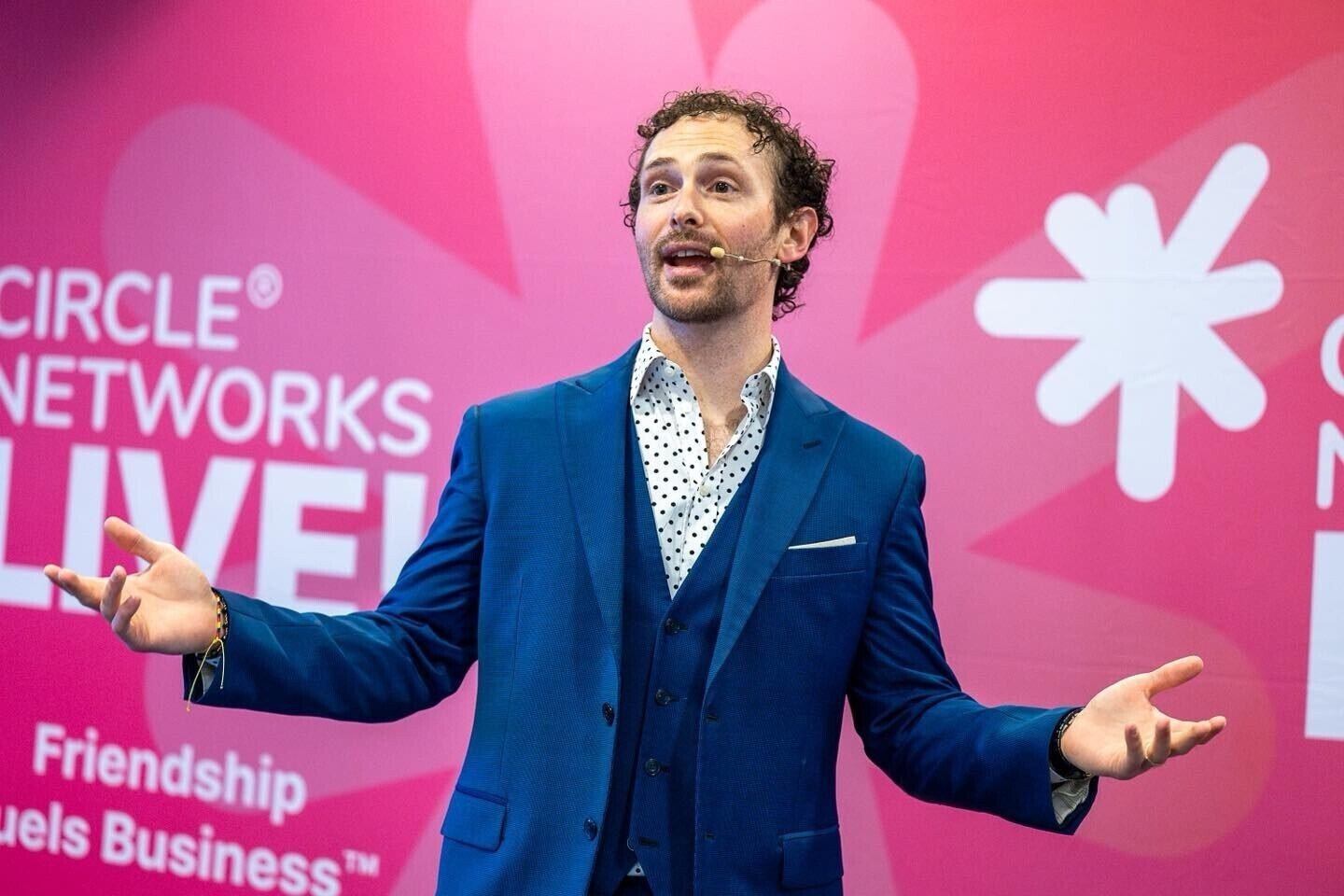
Simone Vincenzi is the co-founder of GTeX and an international speaker who has delivered over 2000 presentations worldwide. Featured in Forbes and Entrepreneur Magazine, and recognised in the House of Parliament as one of the most influential migrant entrepreneurs in the UK, Simone helps coaches, consultants, and expert entrepreneurs scale their businesses through the power of webinars and authentic marketing.
His flagship methodology, the GTeX Method, has helped more than 5,000 entrepreneurs simplify their strategy, amplify their message, and build businesses that create lasting impact.
Together we grow exponentially.
Simone Vincenzi
The Webinar Conversion Expert | GTeX





0 Comments