


You can be great on camera.
You can know your subject better than anyone in the room. And you can still get to the end of your webinar and sell nothing at all.
I know, because I did it 25 times in a row.
Twenty-five webinars. Not one sale.
And here is the thing. My content was fine. My structure was a mess. The day I fixed the structure, the same words started selling, and they have kept selling across over 1,000 webinars since making millions of $.
So let me give you the whole thing.
What is the Million $ Webinar Framework?
The Million $ Webinar Framework has four parts. The intro, three teaching points, the pitch, and the Q&A.
Here is what each part is for.
- The intro makes people feel they are in the right place, at the right time, with the right person.
- The teaching points clear away the things that stop your audience from ever using what you sell.
- The pitch sets up the problem first, then shows the offer, and it gets 15 to 30 minutes.
- The Q&A answers the doubts in the room, even the ones nobody types in the chat.
That is the shape of it. But there is one thing you need to sort out before you touch any of it.
Download the Webinar Resources Pack.
Want to get access to the full Million $ Webinar framework? You will find it inside our webinar resource pack.
Click here to download your webinar resource pack >>

Start here: what do you want them to believe?
A sales webinar and a training webinar are two very different animals.
When you train someone, you are teaching them how to do a thing.
When you sell, you are changing the way they think about their problem. Because when someone thinks about their problem in a new way, they act in a new way, and the thing you want them to do becomes the obvious thing to do.
You are not teaching them what to do. You are teaching them how to think.
So before you make one slide, sit with this question. What is the one thing my audience needs to believe by the end, so that buying from me is the natural next step?
Let me show you mine.
I sell webinar services. So the thing I want you to believe is that webinars are the best way to get clients online. Now think about what happens in your head if you really believe that. Your brain goes, right, I need a webinar. Where do I go? You come to me. Because Italians do webinars better.
That one belief is the thread that ties the whole thing together. Without it you have four bits that just happen to be in the same slide deck. With it, every part pulls the same way.
Right. Now let me show you the four parts.
Part one: the webinar intro that keeps people watching
Every part of your webinar sells the next part of your webinar.
The intro sells the teaching. The teaching sells the pitch. The pitch sells the Q&A. Break that chain anywhere and people leave, and you cannot sell to someone who has gone.
Now here is something I want you to sit with for a second.
When people do not buy at the end, the problem is almost never at the end. It is at the start. The reason to care, the reason to act now, the reason to trust you, all of that gets built in the first ten minutes or it never gets built at all.
So your intro has four jobs.
1. Right place, right time. I want you to feel, in about ninety seconds, that you are in exactly the right room. Some people say hide what you are going to cover, so you can surprise them later. I do the opposite. I tell you the whole plan up front, because that is what makes you sit back and stop looking for the exit.
2. Why this matters to you. Not why the topic is nice in general. Why it matters to you, in your business, with the mess you are sitting in this afternoon. If you believe it matters to you, you stay.
3. Why now. Why does this need your time today and not in six months? If you do not build that here, no bonus and no countdown at the end will save you. The rush at the end only works if you planted it at the start.
4. Why you. This is your story. And it does three jobs at once. It connects you to the room, it shows why they should trust you, and it sets up everything that comes next.
Now on that last one, let me be honest with you, because people fall into two camps and both of them hurt.
You have been on one of those webinars where thirty minutes have gone by, you have learned nothing, and the person is still telling you how great they are. Awful. But the other camp is just as bad. Someone is so shy about themselves that you never find out why you should listen to them at all.
The sweet spot is simple. Tell the story that connects you to your audience. Show the proof that you have done this. And let one real, honest, human moment in there, so people can see a person and not a robot reading slides.
Then tell them why you do what you do. Because when I know why you do what you do, I am much more likely to buy from you later.
Ask permission to sell
Then, still in the intro, I tell them there is an offer coming.
Most people wait for the pitch. I do not. I ask for permission to sell, right at the start.
Here is why that works.
Your audience already knows something is going to be sold. If they have been on a few webinars, they know the drill, and they sit there the whole hour waiting for you to turn. That waiting is quiet resistance, and it is eating your sale long before you get there.
So say it out loud instead. Something like this.
“With your permission, at the end I am going to share something with you that will help you do all of this and get X result. I will show you how we can work together, and I will have an offer for you. Is that okay with everyone? Give me a yes in the chat.”
Boom. You are honest, you have their yes, and they have just told you they are happy to be sold to.
Twenty seconds. One of the biggest lifts in the whole framework.
Part two: three teaching points, built from what stops your audience
Do not start from what you want to teach. Start from what is stopping them.
I have worked with thousands of clients and I get the same question every time. Simone, what do I actually teach on my webinar?
And what most people do is pick their best stuff. The stuff that will wow the room and blow people away, because surely if they are impressed, they will buy.
I get it. I really do. That works great for a training. For a sales webinar it does almost nothing.
Ask this instead. What stops my audience from using the thing I am about to sell them?
Let me show you mine. When someone does not use webinars, it is nearly always one of four things.
One. I do not have an audience, so nobody will turn up. Two. I am not sure what I would even sell. Three. I am not techie and the tech scares me. Four. I am not a good speaker and I hate being on camera.
Now I can teach you everything I know about webinars. But if those four things are sitting in your head, you are still not going to run one. So my content goes straight at those four. How to fill the room. What to sell. Which tech to use and how easy it really is. And what to do if you are not a confident speaker yet.
Once those are gone, webinars make sense to you. And my offer becomes the obvious next step.
Three themes is the sweet spot, by the way. I sometimes run five or seven, but that takes years of practice on a stage, so build up to it rather than starting there. Go past three too early and you will bury the room. Start with three. There is no rush.
How to build each teaching point
Every theme follows the same seven beats. The content changes each time, so it never feels samey to your audience, but the shape under it is always the same.
- What is the theme. Name it, so people know what they are about to learn.
- Why it matters. This is the moment they decide to pay attention or check their phone.
- What people get wrong. Now they see themselves in it. That little “oh, that is me” moment is where the shift starts.
- What to do instead. Give them the what, not the how. The answer, not the full build.
- An example. A client story works best, because it proves the point and proves you at the same time.
- An exercise. Something to do, right there, in the room. I want my webinars to be a chat, not a broadcast.
- A share. What did you learn? That is what makes it stick.
Let me run one of mine through it, so you can see it work.
The theme is how to fill your webinar when you have no audience. Why it matters is easy. You can build the best webinar on earth, and with nobody in the room it is a party for one. Sad day.
What people get wrong is this. They post on social media, ask a few friends, leave it to the last minute, and email a list that died two years ago.
What to do instead is build a partner network. You do not need an audience. You need a few good relationships with people who already have the audience you want.
I worked with a stylist who had almost no list of her own. She built one relationship with a speaker trainer. She got more than 600 sign ups from his audience, and he did all the promoting.
Then the exercise. Write down five people who could put your ideal clients in the room if you asked them.
Then the share. What did you learn?
Now look at what just happened. She walked in thinking “I have no audience, so webinars are not for me” and she walked out of that section thinking “I need partners, and I already know five people to ask”.
You moved the problem. You moved the way she sees it. And she still does not know how to build those partnerships properly, which is exactly where your offer lives.
Then you do the same for theme two, and the same for theme three.
Part three: the webinar pitch, and the three mistakes that kill it
Most pitches fail for three reasons, and I have made all three of them.
The first one is rushing it. You feel like you are stealing time from your audience, so you speed up. Please buy this, thank you very much, bye now, time to wrap up. Nobody buys from that.
The second is going straight into the product. You start listing what is inside to a room that has not felt the problem yet.
The third is nerves. And nerves come from not practising. You have never said the words out loud, so you fumble them in the one moment where being clear really matters.
I did all three. For 25 webinars. So let me tell you what changed.
Give it 15 to 30 minutes. I will not sell anything with less than 15 to 20 minutes, and 30 is better. Here is why. The second someone leaves your webinar is the second they stop listening to you, so my whole job is to keep them in the room as long as I can.
Let their brain catch up. People often need to hear the offer two or three times before they really get what they are buying. And if someone is not sure what they are buying, they do not buy. Saying it twice is not you being annoying. Saying it twice is you making them sure.
Practise the pitch more than the content. You say your content all the time. On videos, in posts, with clients, on stages. The pitch is the one bit you almost never say out loud, and that is exactly why it comes out shaky. Say it until it is second nature, so you can just be with your audience while you do it.
The running order of a webinar pitch that converts
Here is the order I use.
Recap what you covered, so the lessons are fresh. Then name the problem, because your offer only means something as the answer to a problem, and the bigger the problem, the bigger the answer. Say what happens if they do nothing. Say what happens in the worst case. Then paint the picture of how good it could be instead.
Take them into the tension, then give them somewhere soft to land.
Then the offer. Who it is for. Who it is not for, which is optional and works really well. How their life changes if they join, the money, the time, the result they get. Then, and only then, how it works and what is inside.
See what I am doing there? I spend all that time setting it up before I describe a single thing. Because without that, your offer is just a list of stuff.
Then what they get if they decide today. Then the form or the sign up link. Then case studies, because by now their brain has gone all logical and it wants proof. Then your guarantee, if you have one.
And then you say the offer again. How it works, what is inside, the guarantee, and the link.
Now I know what you are thinking, because I thought it too. I already said it once, do I really have to say the whole thing again?
Yes. You do.
I fought this for years. But someone who wants to leave can leave, and I would rather look after the people who are still there and want to make a good call. Hearing a full offer once, after an hour of content, is a lot to hold in your head. So slow down and let them get sure.
The short pitch for corporate and for booking calls
If you sell to corporate, or you want a booked call instead of a sale, the pitch gets much shorter.
The rules do not change. You are just not closing on the webinar, because the real chat happens after, one to one.
So you recap what you covered. You name the problem and what happens if they leave it alone. You paint the picture. Then you say something like this.
“These are some of the things we do, and honestly, right now I do not know which one is best for you. If you want this result and you want this problem gone, book a call and we will work out the right fit together.”
Give the link. Move to the Q&A.
Trying to run a full product pitch with a stack and a countdown at a corporate room does not work. They buy in a different way. And that is completely fine. Sell the conversation instead.
Part four: the Q&A, where people get off the fence
I do not run a webinar without a Q&A. Ever.
It does two jobs. It answers the real questions people have about your content and your offer. And it hands you a free list of everything to fix next time, straight from the people you are trying to help.
My goal in the Q&A is to run over. On purpose. I want you to see that I will stay until the last question is answered, because that is what over delivering looks like, and because the longer people stay in the room, the more they buy.
Two things can happen when you open it up. Either nobody asks anything, or you get flooded.
So I always bring my own questions. And I pick the ones that help someone make a decision about the offer. These are the real ones I get, every single time.
- How much time do I need each week?
- How can you guarantee my result?
- I want to sleep on it. Can I decide tomorrow?
- Will you run this offer again?
- What if it does not work for me?
- How fast will I see results?
- I need to speak to my partner first. Is that okay?
- I cannot start right away. Can I start later?
Even when nobody types those in the chat, they are in the room. They are sitting in people’s heads. So I answer them anyway. My whole aim in a Q&A is to look like a mind reader.
And the way you open it decides what you get back. So invite the right questions out loud.
“I am here now to answer anything about what I shared today, or about the offer I just made.”
Say the offer bit. Leave it out and you get twenty minutes of general questions while nobody touches the thing standing between them and a yes.
Two last details that matter more than they look.
Keep the offer slide up on screen for the whole Q&A. Do not take it away while you are talking.
And at the end, if the room is big or the questions ran long, say how the offer works and what is inside one more time. Yes, that is the third time. Every part of your webinar sells the next part of your webinar, and the Q&A is the last part you have got.
How to build this webinar in one week
You do not need a month. And you do not need it perfect. Here is the order I would build it in.
- Day one, the belief. Write the one sentence your audience needs to believe by the end. Everything hangs off this, so do not move on until it is on paper.
- Day two, the blocks. List every reason your audience does not do the thing you sell. Pick the three biggest. Those are your themes.
- Day three, the teaching. Run each theme through the seven beats. Theme, why it matters, what people get wrong, what to do instead, example, exercise, share.
- Day four, the intro. Right place, why it matters, why now, why you, and your permission to sell line.
- Day five, the pitch. Write the full running order and block 15 to 30 minutes for it in your timings.
- Day six, the Q&A. Write the eight doubts you know your audience has, and write your answers.
- Day seven, practise the pitch. Not the content. The pitch. Out loud, three times at least.
Done is better than perfect here. Your first one will teach you more than another week of planning ever will.
Frequently asked questions about the webinar framework
How many teaching points should a webinar have?
Three. I sometimes run five to seven, but that takes years of practice, and more than three while you are still learning will bury your audience instead of winning them.
How long should a webinar pitch be?
Fifteen to twenty minutes at the very least, and thirty if you can get it. Rushing the pitch is the most common reason a good webinar sells nothing.
Do I really have to say the offer more than once?
Yes. Twice as standard, three times if the Q&A runs long. People need to hear it more than once to be sure what they are buying, and unsure always means no.
What if nobody asks anything in the Q&A?
Bring your own questions. Write the eight doubts you know your audience has, and answer them out loud whether or not anyone types them in the chat.
Does this webinar framework work for a cold or corporate audience?
Yes, with the short pitch. For cold or corporate rooms, go for a booked call instead of a sale, and let the one to one chat do the selling.
What is the difference between a sales webinar and a training webinar?
A training teaches you how to do something. A sales webinar changes how you think about your problem, so buying becomes the obvious next step. Same skills. Very different build.
How do I fill my webinar if I have no audience?
Build partners instead of a list. Find five people who already have your ideal clients and set up a collaboration. One good partner can put more of the right people in your room than a year of posting.
Your next step
- If you are new to my world and want to explore my free content to help you get clients with webinars, check my youtube videos on webinar strategies here >>
- If you want to see my full webinar methodology and are ready to go deeper, register for the free training GET CLIENTS WITH WEBINARS here >>
- And if you have enough or browsing around and are ready to create and launch your high-converting webinar in 30 days, even if you don’t have a big audience, apply for the Webinar Conversion Accelerator >>
Together we grow exponentially.
Simone Vincenzi | Webinar Expert and Founder of GTeX
About the Author
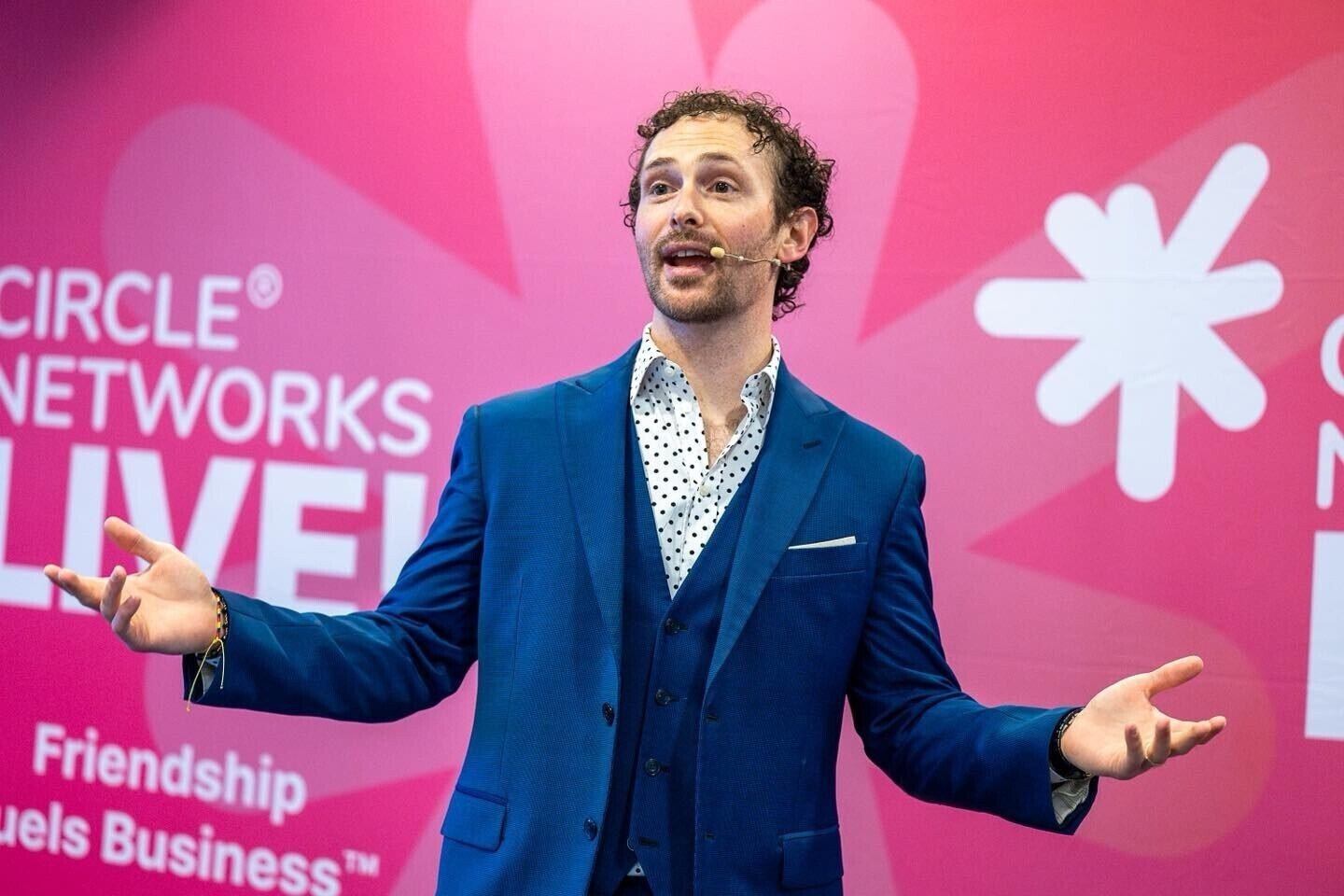
Simone Vincenzi is the co-founder of GTeX and an international speaker who has delivered over 2000 presentations worldwide. Featured in Forbes and Entrepreneur Magazine, and recognised in the House of Parliament as one of the most influential migrant entrepreneurs in the UK, Simone helps coaches, consultants, and expert entrepreneurs scale their businesses through the power of webinars and authentic marketing.
His flagship methodology, the GTeX Method, has helped more than 5,000 entrepreneurs simplify their strategy, amplify their message, and build businesses that create lasting impact.
Together we grow exponentially.
Simone Vincenzi
The Webinar Conversion Expert | GTeX





0 Comments